Closing the Customer Knowledge Gap: What Banking Leaders Told Us About Financial Inclusion

Across the UK, many banking customers who qualify for financial support simply do not access it. Indeed, it’s been found that 24.6 million people have never accessed any kind of financial advice or guidance.
The divide between available services and the customers who need them most remains a significant gap to bridge.
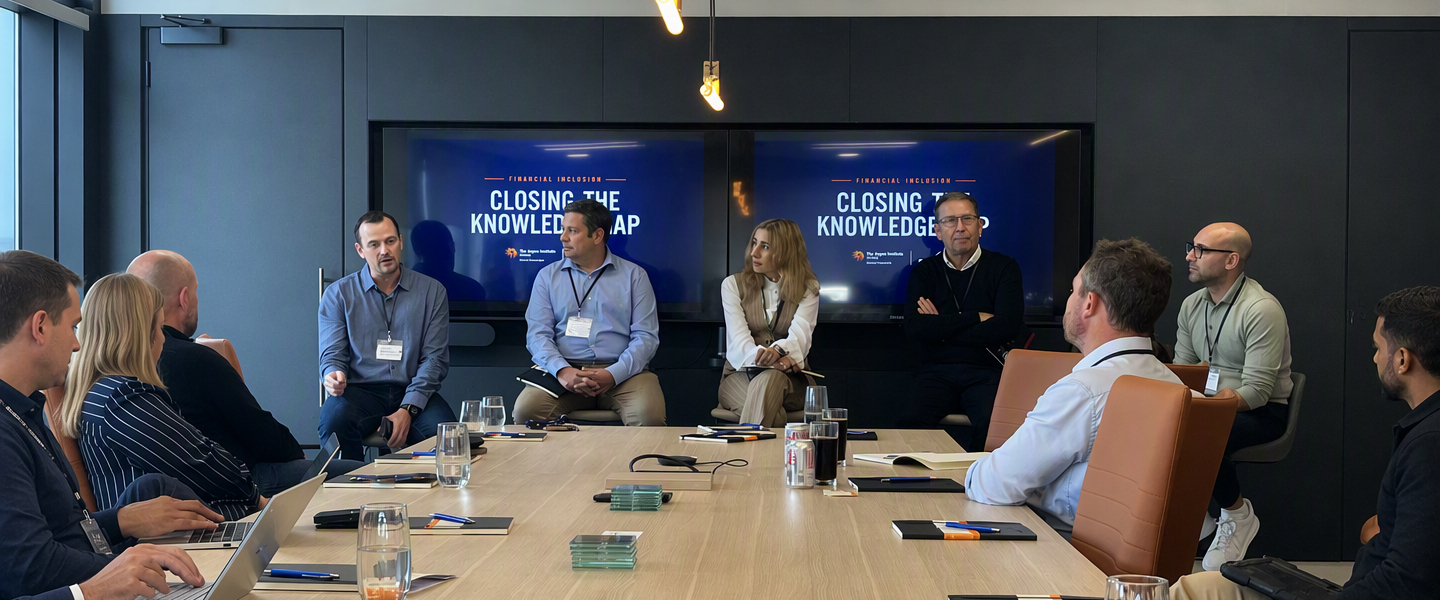
On 15 September, senior leaders from across the UK financial services industry and a prominent figure from the education sector gathered at Firstsource's London headquarters to confront that reality.
The Financial Inclusion panel discussion, chaired by Mark Weir, VP BFS Operations at Firstsource, posed the central question, “How do you close the gap between the services you offer and the customers who need them most?”
Panellists included:
• James Syron, Head of Partnership Performance and Funding at debt counselling charity StepChange
• Kilver Sidhu, an industry expert on financial difficulty, bereavement and customer vulnerability
• Chris Moore, CEO of LINK Education Trust in Salford
• An industry expert in customer vulnerability from a 'big six' UK bank
The conversation moved from classroom curriculum to conversational AI and from social stigma to service design, with six key themes shaping the narrative…
The stigma around debt
Shame is often a bigger barrier than the debt itself. Speaking from his vantage point at the UK’s leading debt counselling charity, James Syron explained that people in financial difficulty delay seeking help not because they don't know support exists, but because reaching out means admitting something they've been taught to hide. Fear of judgement from a lender, adviser or family member keeps someone silent until a manageable problem becomes a crisis.
The discussion turned to empathy, and who delivers it. Every touchpoint a customer has, whether with the bank directly or with an outsourced support partner acting on its behalf, shapes whether they feel safe enough to open up. A non-judgemental, human response at the very first point of contact can be the difference between someone reaching out early and someone going quiet for months. That consistency of care - the same warmth and understanding, whoever answers the call or the chat - is what turns a commitment to financial inclusion into something a customer experiences, not just a policy on paper.
The 2028 curriculum change
From September 2028, financial education becomes a statutory part of the English national curriculum. Schools are working through what pupils need at each key stage, from primary through to Key Stage 4.
According to Chris Moore, schools see real value in partnering with financial institutions not just for funding, but for help with shaping what ‘financially educated’ means for a young person.
The appetite from educators is clear. They want the sector involved early: co-designing age-appropriate content, supporting classroom delivery and bringing real-world context that teachers alone may not have. The panel framed this as a long-term investment in financial capability, not a box-ticking exercise.
Human-first vs digital-first support for vulnerable customers
The tension between digital and human support for customers in difficult circumstances has persisted across the industry, and all four panellists acknowledged it openly. The consensus: it's not a binary choice. Digital and human channels work best together.
The panel challenged the assumption that digital is inherently unsuitable for sensitive journeys such as bereavement or financial difficulty. Many customers prefer digital access in those moments because it lets them find information and begin a process without saying the hardest thing out loud to a stranger on the phone. The strongest support model gives customers real channel choice, with skilled human support layered in when it matters most.
Conversational AI in bereavement support
Building on that discussion, the panel explored conversational AI as a specific opportunity in bereavement support, framed not as an efficiency measure but as a way to be present when customers need help most. Grief doesn't observe office hours. Always-on AI means a bereaved customer can access guidance at two in the morning without waiting for a call centre to open.
Panellists noted that well-designed conversational AI can deliver something human teams struggle with at scale: consistency and patience. A customer dealing with bereavement may need to revisit the same information several times or pause and return later. AI accommodates that without the customer feeling they are a burden.
The panel was clear on limits: AI should complement human support for the most sensitive conversations, not replace it.
A banking-sector 'Tell Us Once' bereavement service
Kilver Sidhu raised an issue that resonated across the room. When someone dies, the bereaved are often forced to contact every institution separately - banks, utilities, telecoms providers - repeating the same painful details each time. The emotional toll of that repetition is heavy and, as the panel argued, should be avoidable.
The discussion centred on whether banking could build its own version of the UK government's 'Tell Us Once' service. A step in that direction already exists: the Death Notification Service lets a bereaved person notify multiple participating banks, building societies, insurers, and utility companies in one go - a genuinely useful example of institutions collaborating on exactly the problem the panel raised.
But it's not the full picture. Unlike the government's service, participation is opt-in, so coverage depends on which organisations have signed up, and the bereaved person still has to find the service and submit the notification themselves, rather than the institution they're already dealing with taking on that responsibility for them. Closing that gap fully, the panel argued, means moving from a helpful add-on service towards something closer to standard practice - notification handled proactively by the bank or provider already supporting the family, not an extra step for them to find and complete.
Lessons from Domino's order-tracking model
Sidhu also offered an unexpected but compelling analogy on the topic of improving customer journeys. Domino's real-time order tracker, the simple progress bar that shows the pizza being prepared, in the oven, and finally out for delivery, was held up as a model banking could learn from. The principle is straightforward: when customers can transparently see where things stand, they feel less anxious and are less likely to phone for an update.
Applied to banking, visible progress tracking could improve experiences for everything from complaints to bereavement case management. A bereaved customer who can see that paperwork has been received, a review is underway and an account closure is in progress gains confidence without having to ask. It's a small design choice with an outsized impact on trust and on the emotional load carried by customers.
The Financial Inclusion panel made one thing clear: closing the customer knowledge gap isn't a single initiative or a technology decision. It's a sustained, cross-sector commitment to language, education, smarter use of digital tools and, above all, putting the customer’s experience at the centre.
To find out more about Firstsource’s ‘Banking on Knowledge’ campaign and how the sector is coming together around financial inclusion, visit the campaign hub at firstsource.com/financial-inclusion.