Using smart technology to redesign the student experience
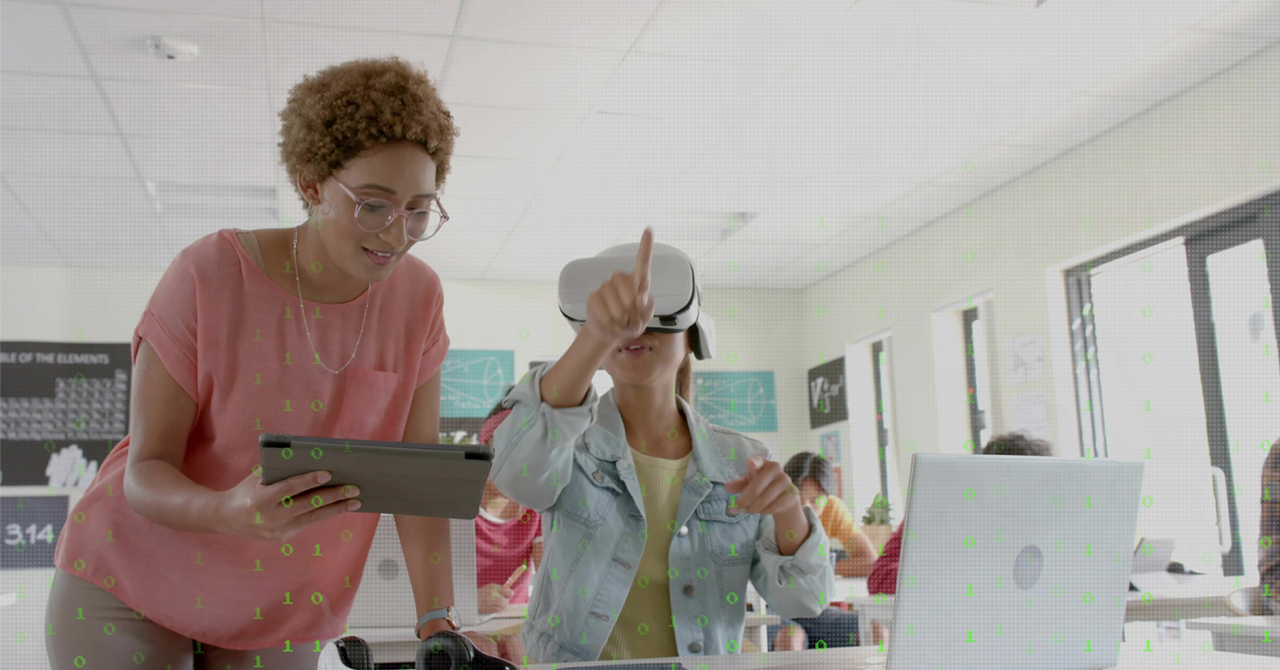
How AI and data analytics are moving higher education from persona-based profiles to genuinely personalized student journeys.
The digital transformation of higher education has been underway for decades. It began in the 1990s when forward-thinking institutions started applying technology to administrative functions: managing enrollment records, processing financial aid, and communicating with students at scale. These early investments were primarily about operational efficiency, and the improvements were real.
What has changed materially in recent years is the scope of what smart technology can deliver. The goal today is not just to automate a process but to use data, AI, and connected systems to deliver a student experience that is consistent, connected, and genuinely personalized to the individual. That is a qualitatively different objective, and it requires a different technology infrastructure and a different institutional mindset about what student service means.
Student experience as a unique selling point
Non-traditional students, working adults pursuing credentials alongside careers and family responsibilities, are the fastest-growing segment of the higher education market. They are also its most demanding consumers. Having spent years experiencing high-quality service in commercial contexts, from retail and banking to healthcare and entertainment, they bring corresponding expectations to their interactions with educational institutions.
Slow response times, fragmented communication systems, and administrative processes designed for 18-year-old residential students are not minor friction points for this population. They are signals that the institution was not built for them, and they are reasons to choose an alternative. With more credentialing options available than any previous generation of learners has had access to, non-traditional students can and do make that choice.
The economic pressure on institutions reinforces this. With ever-rising tuition, prospective students of all ages are more sophisticated in evaluating institutional choices. They compare outcomes, support quality, and reputation for responsiveness before committing. A consistent, connected, and customized student experience is no longer a differentiating premium feature; for institutions competing for the non-traditional learner market, it is the minimum viable offer.
From "persona" to "personalized"
Higher education has long used "personas," composite fictional profiles representing categories of ideal students, as the primary tool for designing marketing strategies, advising programs, and student services. Personas are a useful planning tool for identifying broad patterns and designing for the average case. The problem is that real students are not averages. Decisions built on persona profiles systematically miss the individual, and in a competitive market, missing the individual means losing the student.
Smart technologies address this structural limitation. AI and big data make it possible to build predictive models of individual student behavior: identifying the specific students who are showing early signals of disengagement, who are most likely to respond to particular types of outreach, or who are approaching decision points in their academic journey where timely intervention changes the outcome.
Now enter smart technologies that empower institutions to create predictive journeys and value-added experiences for individual students based on actual behavioral data, not assumed personas. The institution can act on individual signals rather than waiting for aggregate cohort trends to become visible in end-of-term data, at which point intervention is often too late.
In addition to behavior analysis, AI and big data are being used to deliver genuinely personalized learning experiences. Adaptive platforms adjust content sequencing, pacing, and supplemental resources based on individual performance data. Students who are progressing quickly receive appropriately challenging material; those who are encountering difficulty receive targeted support matched to their specific knowledge gap, before the problem compounds into a course failure or withdrawal.
Pain points quickly resolved
Smart technology also addresses a practical problem that directly drives attrition: students need accurate, personalized information on demand, and traditional service delivery models cannot consistently provide it. Faculty and staff hours are finite. The volume, range, and timing of student inquiries are not.
Northern Arizona University provides a concrete example. This institution built an AI-powered bot that provides students with immediate access to personalized information: class schedules, grades, financial aid status, campus resources, and advising support, available at any time without requiring office hours or appointment scheduling. Students get what they need when they need it, not when the institution is available to provide it.
For staff, the operational result is significant: the volume of routine inquiries that previously consumed advising and student services hours has shifted to the AI system, freeing staff capacity for complex, relationship-intensive interactions where human judgment and empathy genuinely matter. Northern Arizona has saved substantial faculty and staff time while improving the quality of service students experience. The model demonstrates that efficiency and student experience improvements are not in tension when smart technology is deployed thoughtfully.
Enhanced opportunities for engagement
Gamification is an exceptionally well-suited strategy for promoting student engagement in online learning environments. When course content is structured around the same design principles that make digital games engaging, such as clear progress feedback, achievement recognition, competitive elements, and social interaction, students maintain higher levels of participation across longer learning sequences.
A well-designed gamified learning environment incorporates competitive leaderboards, achievement badges, and point attribution for completing learning milestones. It builds in the social dimensions of motivation: students who can see their progress relative to peers, collaborate within the learning environment, and earn visible recognition for achievement are more likely to persist through challenging content than those working in isolation with no feedback beyond grades.
Smart technologies are also being used to transform alumni engagement and institutional advancement. AI-driven platforms can analyze alumni behavior, giving history, communication preferences, and engagement patterns to identify individuals most likely to respond positively to outreach, and to tailor those communications to the specific interests and history of each person. The higher education community has been pioneering these approaches, with institutions reporting meaningfully improved response rates and donor retention compared to traditional broadcast fundraising strategies.
Work with the experts
Smart technology is driving a genuine renewal in higher education's digital transformation, particularly for the non-traditional student populations that represent the primary growth opportunity in the current enrollment environment. The case for investment has never been clearer, and the tools available have never been more capable.
But the returns on this investment depend entirely on implementation quality. Digital tools must be carefully selected, fully integrated into existing institutional systems and data infrastructure, and supported by a well-designed deployment plan that accounts for the institution's specific student population, existing technology environment, and staff capability.
The universe of smart technology continues to evolve rapidly, introducing new capabilities at a pace that most institutions cannot monitor independently alongside their core educational mission. Partnerships with experienced EdTech providers give institutions access to the implementation expertise, integration patterns, and ongoing advisory support they need to make investment decisions confidently and to realize the operational and student experience improvements those investments are meant to deliver.
%20Thumbnail%20Images/Article2_408x213.png?updatedAt=1792078849371&tr=w-412,h-232,c-maintain_ratio,q-80)
%20Thumbnail%20Images/Article1_408x213.png?updatedAt=1792078849256&tr=w-412,h-232,c-maintain_ratio,q-80)